
Buddha's Journey with Taj Mahal
In this itinerary for a “Buddha journey with Taj Mahal” tour typically starts from Delhi, follows the Buddhist circuit to key sites like Bodhgaya (enlightenment), Sarnath (first sermon), and Rajgir/Nalanda (ancient learning centers). The and visit Taj Mahaltour often concludes by returning to Delhi, covering different spiritual sites related to Lord Buddha and the iconic monument.
| Tour Highlights | |
|---|---|
| Nalanda | Nalanda University |
| Bodhgaya | Ajatshatru's Fort, Venuvana Monastery, Swarna Bhandar Caves and the Cyclopean Walls. The final stop will be to visit the Vishwa Shanti Stupa (Peace Pagoda), the Mahabodhi Temple, Animeshlochana Temple |
| Varanasi | Ganga Aarti (a prayer ceremony), Durga Temple, Tulsi Manas Temple, Banaras Hindu University, Vishwanath Temple, Sarnath |
| Agra | Taj Mahal, Agra Fort |
| Delhi | Raj Ghat, India Gate, President House, Qutub Minar, |
Detailed Itinerary
You are met by our airport representative in the arrival area of the airport after you clear all immigration and customs formalities. Special welcome awaits at the airport with nice garlands of marigold flowers. Depart for your hotel where you will check in for your stay.
Delhi, a city built seven times by different dynasties, the capital of India, and also the third largest city in India, with a population of about 14 million. Its strategic location along the north-south, east-west route has given it a focal position in Indian history and many great empires have been ruled from here. Dotted with about 1300 monuments and ruins it lie scattered throughout the city, often cheek by jowl with modern structures and high-rise towers.
Overnight stay at hotel
Morning transfer to Delhi Airport to board flight for Patna
DEP: DELHI 0810 Hours 6E 2769 (INDIGO)
ARR: PATNA 0950 Hours
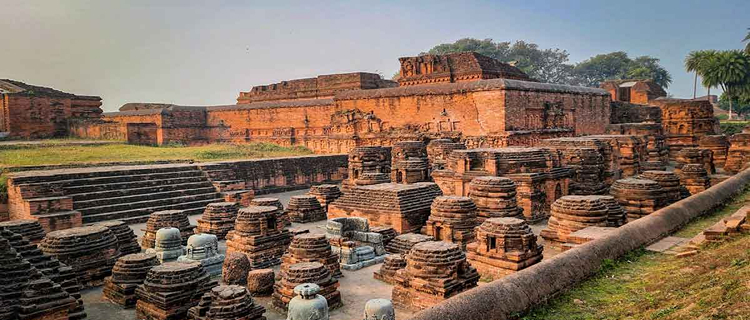
Upon arrival at Patna airport you will be met and transferred to Rajgir. En route, visit Nalanda University, which is one of the first universities in the world which is said to have been visited by Buddha during his teachings.
Upon arrival in Rajgir, check into your hotel and have the remainder of the evening free at your leisure.
Overnight stay at hotel.
Enjoy a morning visit of the city of Rajgir, filled with a number of temples, monasteries and pagodas. Rajgir was the capital of Magadh Empire until Ajatshatru moved it to Pataliputra (Patna) in the 5th century BC. Rajgir is an important Buddhist pilgrimage site, as it is believed to be where Buddha spent most of his life teaching his disciples. In Rajgir you will tour Ajatshatru's Fort, Venuvana Monastery, Swarna Bhandar Caves and the Cyclopean Walls. The final stop will be to visit the Vishwa Shanti Stupa (Peace Pagoda), where you will take a chairlift to the top.
Afterwards, depart for Bodhgaya. The drive will take approximately 2 hours (80 km). Upon arrival, check into your hotel.
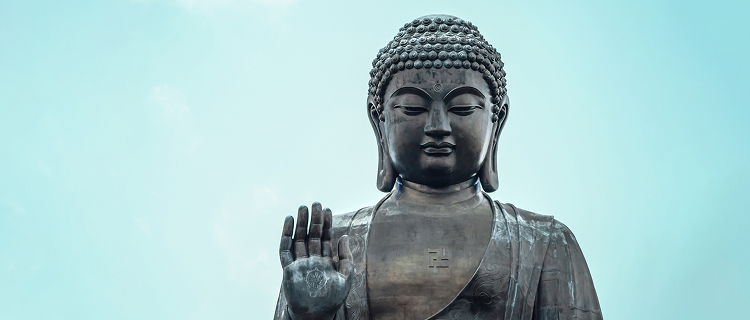
The small town of Bodhgaya is an important site for Buddhism as it is believed to be the place where Buddha attained enlightenment. Thousands of Buddhist pilgrims visit each year from all over the world.
Overnight stay at hotel
After breakfast you will visit the sites of Bodhgaya. Start with the Mahabodhi Temple, also known as the ‘Great Awakening Temple’ and is one of the earliest Buddhist temples that still survives today. Parallel to the temple is the Jewel Walk, also known as Chankaramana, a low platform which has impressions of Buddha’s footprints.
Next to the Animeshlochana Temple is the Bodhi Tree, where it is believed that Buddha gained enlightenment after meditating underneath the tree facing east for 49 days. You will also see Vajrasana, the seat where Buddha sat in meditation, the ancient railings which surround the Mahabodhi Temple and the nearby shrine Ratnagar, which is a sacred place for Buddhists.
Surrounding the area are a number of monasteries that have been built by the people of Tibet, Japan, China, and Thailand. Each monastery reflects the style of their respective countries.
Overnight stay at hotel
After breakfast and check-out, leave for Varanasi arriving later in the afternoon. The drive will take approx. 5hours (270km).
As the religious capital of Hinduism, Varanasi is the oldest living city in India as well as one of the seven sacred cities of Hinduism and Jainism. This evening we take a rickshaw ride through the streets of Varanasi to the ghats of the River Ganges to witness the Pooja ceremony of Ganga Aarti (a prayer ceremony).
Please note: The Ganga Aarti takes place most evenings, so please be prepared for a lot of crowds through the streets, especially leading up to the ghats. Please remember to wear closed in shoes and to always be careful and mindful of your belongings. It is also important to watch where you step, as devotees, crowds of tourists, animals and rickshaws all head towards the same direction of the ghats.
Overnight stay at hotel
Rise early and cruise on the River Ganges to view the ghats at sunrise when they are abuzz with activity. Devotees perform their ablutions in the river or offer prayers to the rising sun and performing other religious rituals. As you cruise along the ghats you will have an ideal vantage point to view these activities.
After returning to the hotel for breakfast, commence on a city tour of Varanasi. Visit some of the important temples like Bharat Mata Mandir, a unique temple inaugurated by Mahatma Gandhi, which interestingly houses one of the most perfect relief maps of India and is dedicated to Mother India. Another is the Durga Temple, dedicated to the Goddess Durga, and the nearby Tulsi Manas Temple which is dedicated to Lord Rama.
Afterwards, drive around the largest residential university of Asia, Banaras Hindu University, founded by Pandit Madan Mohan Malviya. Here you will see the new Vishwanath Temple which is located inside the University Campus.
This afternoon, travel to Sarnath, the fabled place where Lord Buddha delivered his first sermon to his disciples expounding the principles of Buddhism. The ruins here date back to as far as the 3rd Century BC. Afterwards, return to Varanasi and have the remainder of the evening free at your leisure.
Please note: Refrain from taking photos of any burning ghats, as this is a funeral ceremony and is inappropriate.
Overnight stay at hotel
After breakfast you will transfer to Varanasi railway station to board train for Agra
DEP: VARANASI 1530 Hours 20175 (VANDE BHARAT EXPRESS)
ARR: AGRA 2220 Hours
Met upon arrival and transfer from Agra Railway station to hotel. Check-in at hotel.
Agra Grew in prominence under the rule of the Mughal Empire in 1526, reaching its zenith between 1556 and 1658, under the successive rules of Akbar, Shah Jehan and Jehangir. Akbar's reign was memorable in the city's history when it became a leading centre of art, science, commerce and culture, drawing intellectuals and artists to its Darbars and Havelis.
Overnight stay at hotel
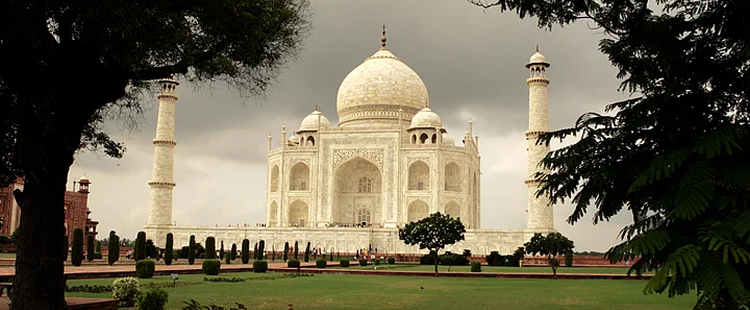
After Breakfast We will visit the world famous Taj Mahal (Closed on Friday). It was built by Shah Jahan in 1632 for his Queen Mumtaz Mahal to enshrine her mortal remains. This architectural marvel is a perfectly proportioned masterpiece fashioned from white marble that stands testimony to the skill of 20,000 craftsmen brought together from Persia, Turkey, France and Italy and who took 22 year to complete this 'Love Poem in Marble'.
Later visit of Agra Fort. Built by Emperor Akbar between 1565 & 1573, it reveals the Mughal talent for combining defensive architecture with beauty and design. The construction of the fort was started by Emperor Akbar as a purely defensive citadel and was subsequently completed by two successive generations that added the delicate mosaic and magnificent marble palaces. The fort is a majestic complex where Emperor Shah Jahan was imprisoned by his son Aurangzeb and offers a fascinating view of the Taj Mahal.
After Lunch we drive to Delhi, Arrive Delhi and Transfer to Hotel.
Overnight stay at hotel
After breakfast we will visit Old Delhi was an ancient walled city. Mughal Emperor Shah Jehan in 1650 switched the Mughal capital from Agra to Delhi. Shah Jehan possessing an exquisite talent, especially in architecture, created the seventh city and in the process brought about Delhi's glorious renaissance. Start the day with a cycle rickshaw ride through Old Delhi. Here you will see Red Fort (from outside) the most opulent Fort and Palace of the Mughal Empire. The fort is Shah Jehan's symbol of power and elegance, built behind red sandstone walls. Its main gate (Lahore Gate) faces Chandni Chowk, the perpetually congested avenue heading west from the Red Fort is filled with twisting lanes, small streets and crowded bazaars. If you peer through a portico you may see a man getting shaved, silver being weighed, or any other conceivable form of intense commerce. Also visit Raj Ghat, the memorial site of the Mahatma Gandhi; Jama Masjid, the largest mosque in India; and Chandni Chowk, the bustling and colourful market of the old city. Chandni Chowk was the commercial centre of Delhi in the old time and you will see it come alive in the morning as the trading day starts.
Afternoon visit New Delhi was designed and built by the British in the 1920's - it's a city of wide boulevards impressive Government buildings, green parks and gardens. In 1911 King George V announced the transfer of the capital from Calcutta to Delhi. The King's architects, Lutyens and Baker, set in motion the design and construction of Delhi's eight city - New Delhi. Lutyens designed an "Imperial City" having palatial-sized buildings set amid broad tree-lined avenues punctuated by Mughal style gardens, complete with fountains and shallow pools. It took 20 years to complete this immense undertaking only to have the British pack up and relinquish the subcontinent in 1947. You will visit Qutub Minar- Qutub Minar also Qutub Minar, is a UNESCO World Heritage Site. The Qutub Minar is constructed with red sandstone and marbel, it is the tallest free-standing stone tower in the world, and the tallest minaret in India, with a height of 72.5 meters (237.8 ft), contains 379 stairs to reach the top, and the diameter of base is 14.3 meters where as the last store is of 2.7 meters. The Construction was commenced by Qutb-ud-din Aibak in 1199 A.D and completed by Iltutmish.
The Qutub Minar is notable for being one of the earliest and most prominent examples of Indo-Islamic architecture. It is surrounded by several other ancient and medieval structures and ruins, collectively known as Qutub complex. Your drive takes you along the ceremonial avenue, Rajpath, past the imposing India Gate and Parliament House.
After Sightseeing you will be transfer to Delhi Airport to board flight for home country
******END OF OUR SERVICES **********
In all hotels the Check-in time is 1500 Hours and Check-out is 1100 Hours at noon.
Provide Your Details - Our experts would love to create package just for you
Travel Details *MANDATORY

Satisfaction
You Can Trust

Travel

Hotels