
The Footprint of The Buddha
- Home / Pilgrimage Tours / The Footprint of the Buddha
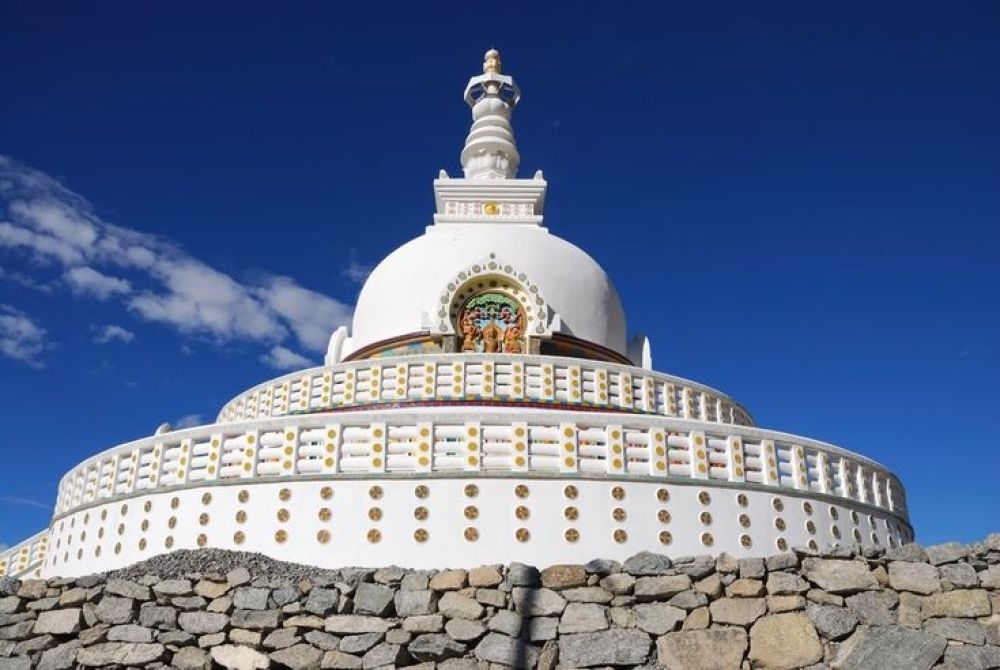
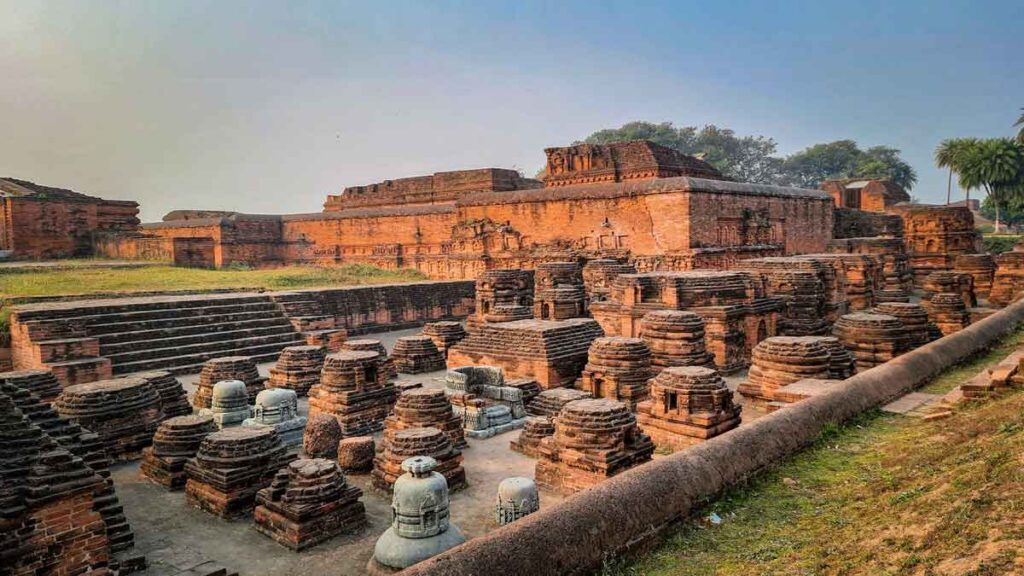
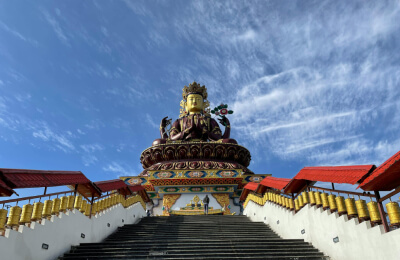
In this itinerary for a “The footprint of Lord Buddha” tour typically starts from Delhi, follows the Buddhist circuit to key sites like Bodhgaya (enlightenment), Sarnath (first sermon), and Rajgir/Nalanda (ancient learning centers). The and visit Taj Mahaltour often concludes by returning to Delhi, covering different spiritual sites related to Lord Buddha and the iconic monument.
| Tour Highlights | |
|---|---|
| Lucknow | Bara Imambara, Lucknow residency |
| Sravasti | Jetvana gardens |
| Lumbini | Visit Lumbini |
| Kushinagar | Visit Kushinagar |
| Rajgir | Kesariya Stupa, Nalanda |
| Bodhgaya | Ajatshatru's Fort, Venuvana Monastery, Swarna Bhandar Caves and the Cyclopean Walls. The final stop will be to visit the Vishwa Shanti Stupa (Peace Pagoda), the Mahabodhi Temple, Animeshlochana Temple |
| Varanasi | Ganga Aarti (a prayer ceremony), Durga Temple, Tulsi Manas Temple, Banaras Hindu University, Vishwanath Temple, Sarnath | Delhi | Raj Ghat, India Gate, President House, Qutub Minar, |
Detailed Itinerary
You are met by our airport representative in the arrival area of the airport after you clear all immigration and customs formalities. Special welcome awaits at the airport with nice garlands of marigold flowers. Depart for your hotel where you will check in for your stay.
Delhi, a city built seven times by different dynasties, the capital of India, and also the third largest city in India, with a population of about 14 million. Its strategic location along the north-south, east-west route has given it a focal position in Indian history and many great empires have been ruled from here. Dotted with about 1300 monuments and ruins it lie scattered throughout the city, often cheek by jowl with modern structures and high-rise towers.
Overnight stay at hotel
Morning transfer to Delhi railway station to board train for Lucknow
DEP: DELHI 0610 Hours 12004 (shatabdi EXPRESS)
ARR: LUCKNOW 1255 Hours
Lucknow, the capital of the state of Uttar Pradesh, is famous for classic monuments of Islamic and British periods, charming bazaars, crowded streets and delicious cuisines. Above all, the city possesses a remarkable history. Lucknow rose to its prominence in the mid-18th century when it became the capital of province of Awadh (Oudh) in colonial India.
Met upon arrival at railway station and transfer to hotel. Check-in at hotel.
After lunch proceed with the sightseeing of Lucknow- City of gardens. It was the 18th century capital of Nawab Wazirs and a center of culture and tradition. Visit the Bara Imambara, built in the 18th century. The absence of beams and pillars in the huge main hall is an architechural achievement. Also visit Lucknow residency where the British resident lived and the picture gallery exhibiting excellent full size portraits of the Nawabs of Oudh.
Overnight stay at hotel.
After breakfast drive to Sravasti and on arrival check-in at hotel. After lunch proceed with the sightseeing tour of Sravasti.
In the time of Buddha Sravasti was the capital Kingdom of Kosala. It is thought that Buddha spent 24 monsoon seasons in the Jetvana gardens here.
Overnight stay at hotel
After breakfast drive to Lumbini en-route lunch at hotel The Retreat (Shivpatinagar).
After lunch drive to Lumbini and on arrival check-in at hotel. Proceed with the sightseeing tour of Lumbini.
Lord Buddha was born at Lumbini while his mother was on her way to parental home from Kapilavastu. Buddha was in Lumbini during the full moon day in the month of vaisakh in 623 BC. He was born under a Sal tree when Mayadevi was going to her maternal town on the occasion of delivery.
Overnight stay at hotel
After breakfast drive to Kushinagar and on arrival check-in at hotel. After lunch proceed with the sightseeing tour of Kushinagar.
Here at the age of 80 Buddha passed into Mahaparinivana. Buddha was finally freed from the eternal cycle of re-birth leaving with us all the wisdom and knowledge of Muktabandhanastupa built by Malla dynasty to house Buddha’s relics after the cremation.
Overnight stay at hotel
After breakfast drive to Rajgir en-route visiting Kesariya & Vaishali.
Kesariya Stupa: The stupa is the largest in the world with the height of 104 ft attracts lots of Buddhist pilgrimage around the world. Excavated in 1998 the stupa is rare example of Buddhist architecture and archeological preservation. Stupa competes with that of Borobodur (103 ft) in Java, world heritage site.
Vaishali was one of the Buddha’s favourite retreats and he came here on many occasions. It was here Buddha delivered the last sermon, indicating that he would be soon departing from the world. Emperor Ashoka erected a huge pillar to commemorate the spot of last sermon. Around one hundred years after he died the second council was held here. Hundreds of Indian monks met in Vaishali to discuss the vinaya rules and to chant a sutras together. Today visitors can see a famous “Lion Pillars” which carved out of single peace of red sandstone and stands 18.3 meter high. Also of great significance are the two stupas which house caskets containing the ashes of the Lord Buddha’s remains.
Lunch at Vaishali and later on drive to Rajgir. On arrival in Rajgir check-in at hotel.
Overnight stay at hotel
After breakfast proceed with the sightseeing tour of Rajgir & Nalanda.
Nalanda founded in 5th century BC, was one of the world’s great universities. Visit the remains of the brick built Great Stupa and local archeological museum.
Rajgir was the capital of Magadh Empire until Ajatshatru moved it to Pataliputra (Patna) in the 5th century BC. Rajgir is an important Buddhist pilgrimage site as Buddha had spent 12 years here and the first Buddhist council after the Buddha attained Nirvana was held here. Visit Ajatshatru's fort, Venuvana, Swarna Bhandar, the Cyclopean wall. Visit the Peace Pagoda on chair lift.
Lunch at hotel. After Lunch drive to Bodhgaya.
Overnight stay at hotel
After breakfast proceed with the sightseeing tour of Bodhgaya.
Bodhgaya (also written Bodh Gaya) in north-eastern India is the site of the Buddha’s enlightenment and the most important of four main Buddhist pilgrimage destinations known as Uruvela in the Buddha’s time. The two major sacred sites in Bodhgaya are the Mahabodhi Temple and the Bodhi Tree, around which many other temple and monasteries of various Buddhist traditions (Japanese, Tibeten, Bhutanese, Vietnamese, Thai and others) have been built. Every year, millions of Buddhist pilgrims, mainly from Asian countries, flock to Bodhgaya to be inspired, despite negative karma and earn merit by visiting the holy site where the Buddha became Buddha (“Enlightened one”). Throughout the day and night in the height of pilgrimage season, monks in colourful robes can be seen mediating where the Buddha did, studying Dhama texts, making offerings to the many statues and stupas on the site, and circumambulating (walking around) the sacred Mahabodhi Temple. City tour of the religious town revered both by the Buddhists and Hindus alike. Visit the Mahabodhi Temple, known for its Bodhi Tree where Gautama attained supreme knowledge to become Buddha. The tree standing today is believed to have grown from the original Pipal tree under which Lord Buddha mediated.
Overnight stay at hotel
After breakfast drive to Varanasi and on arrival check-in at hotel. Lunch at hotel.
In the evening, go down to the banks of the river Ganges to witness the Aarti, a prayer to the mother river conducted every by five priests on the bank of the river.
Overnight stay at hotel
Early morning boat cruise on river Ganges. The western banks of Ganges has a string of Ghats the chain of stone steps, all built with pavilions, palaces and terraces, most of which are mainly used as Dharamsalas where the pilgrims stay during their visit to the holy city. At dawn the Ghats are abuzz with activity of the devotees performing their ablutions in the river of offering prayers to the rising sun and performing other religious Rituals. A Boat ride along th Ghats gives you vantage views of the activity. The Sunrise of the Ganges is a soul-lifting experience. Later visit the Vishwanath Temple also called the Golden Temple because of the Gold-Plating on its roof. Return hotel for Breakfast at hotel.
After breakfast proceed with the sightseeing tour of Sarnath.
Sarnath, 10 kms from Varanasi is the fabled place, which bears testimony to its great past where lord Buddha delivered his first sermon to his disciples, expounding the principles of Buddhism. The remains date back to as far as the 3rd century BC when emperor Ashoka founded various institutions, Stupas, monasteries and pillar edicts. Visit the art collection at the Archaeological museum. The main attractions is the superb capital from Ashokan Pillar-the Ashokan symbol of four back to back lions which has been adopted as the state symbol independent India. Also visit the Mahabodhi Buddha temple and walk around the deer park. Later see the monastery ruins area, Dhameka Stupa.
Evening free at leisure.
Overnight stay at hotel
Morning transfer to Varanasi Airport to board flight for Delhi
DEP: VARANASI 0935 Hours 6E 2321 (indigo)
ARR: DELHI 1135 Hours
Met upon arrival and transfer from airport to hotel. Check-in at hotel. After lunch proceed with the sightseeing tour of Akshardham Temple.
Akshardham Temple: Akshardham Temple in Delhi has an important place in Delhi's tourism. The structure depicts great Indian culture and its architecture is simply immaculate. The temple is located at NH 24, Noida Mor, New Delhi. This amazing structure comprises of 20,000 statues, floral motifs and exquisite carved pillars made of stones. This beautiful structure and masterpiece architecture was built under the support and funding of the Bochasanvasi Aksharpurushottam Swaminarayan Sanstha (BAPS). The architecture of Akshardham temple is similar to the one at Gandhinagar in Gujarat. The main monument at the temple is about 141 feet high with a beautiful statue of Lord Swaminarayan. There are various structures within the temple which depicts the history and culture of Hindu Religion.
Overnight stay at hotel.
After breakfast we will visit Old Delhi was an ancient walled city. Mughal Emperor Shah Jehan in 1650 switched the Mughal capital from Agra to Delhi. Shah Jehan possessing an exquisite talent, especially in architecture, created the seventh city and in the process brought about Delhi's glorious renaissance. Start the day with a cycle rickshaw ride through Old Delhi. Here you will see Red Fort (from outside) the most opulent Fort and Palace of the Mughal Empire. The fort is Shah Jehan's symbol of power and elegance, built behind red sandstone walls. Its main gate (Lahore Gate) faces Chandni Chowk, the perpetually congested avenue heading west from the Red Fort is filled with twisting lanes, small streets and crowded bazaars. If you peer through a portico you may see a man getting shaved, silver being weighed, or any other conceivable form of intense commerce. Also visit Raj Ghat, the memorial site of the Mahatma Gandhi; Jama Masjid, the largest mosque in India; and Chandni Chowk, the bustling and colourful market of the old city. Chandni Chowk was the commercial centre of Delhi in the old time and you will see it come alive in the morning as the trading day starts.
This is a marvel of modern engineering to have been put in to one of the most crowded parts of India. A perfect example of how India changing while still keeping to its past.
Afternoon visit New Delhi was designed and built by the British in the 1920's - it's a city of wide boulevards impressive Government buildings, green parks and gardens. In 1911 King George V announced the transfer of the capital from Calcutta to Delhi. The King's architects, Lutyens and Baker, set in motion the design and construction of Delhi's eight city - New Delhi. Lutyens designed an "Imperial City" having palatial-sized buildings set amid broad tree-lined avenues punctuated by Mughal style gardens, complete with fountains and shallow pools. It took 20 years to complete this immense undertaking only to have the British pack up and relinquish the subcontinent in 1947. You will visit Qutub Minar- Qutub Minar also Qutub Minar, is a UNESCO World Heritage Site. The Qutub Minar is constructed with red sandstone and marbel, it is the tallest free-standing stone tower in the world, and the tallest minaret in India, with a height of 72.5 meters (237.8 ft), contains 379 stairs to reach the top, and the diameter of base is 14.3 meters where as the last store is of 2.7 meters. The Construction was commenced by Qutb-ud-din Aibak in 1199 A.D and completed by Iltutmish.
The Qutub Minar is notable for being one of the earliest and most prominent examples of Indo-Islamic architecture. It is surrounded by several other ancient and medieval structures and ruins, collectively known as Qutub complex. Your drive takes you along the ceremonial avenue, Rajpath, past the imposing India Gate and Parliament House.
After Sightseeing you will be transfer to Delhi Airport to board flight for home country
**********END OF OUR SERVICES **********
In all hotels the Check-in time is 1500 Hours and Check-out is 1100 Hours at noon.
Provide Your Details - Our experts would love to create package just for you
Travel Details *MANDATORY

Satisfaction
You Can Trust

Travel

Hotels