
ENCHANTING RAJASTHAN
- Home / Adventure Tour Packages / Enchanting Rajasthan
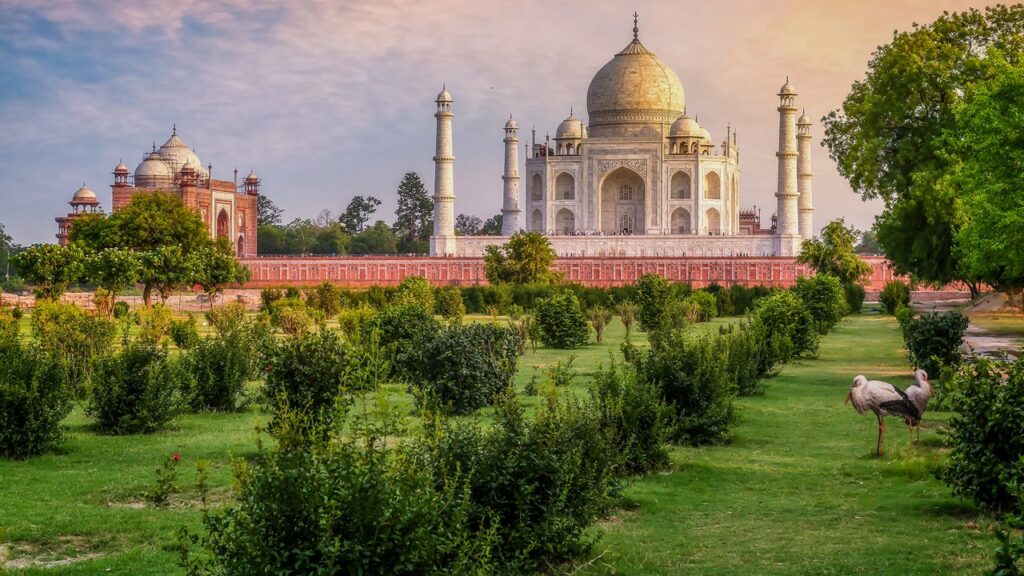
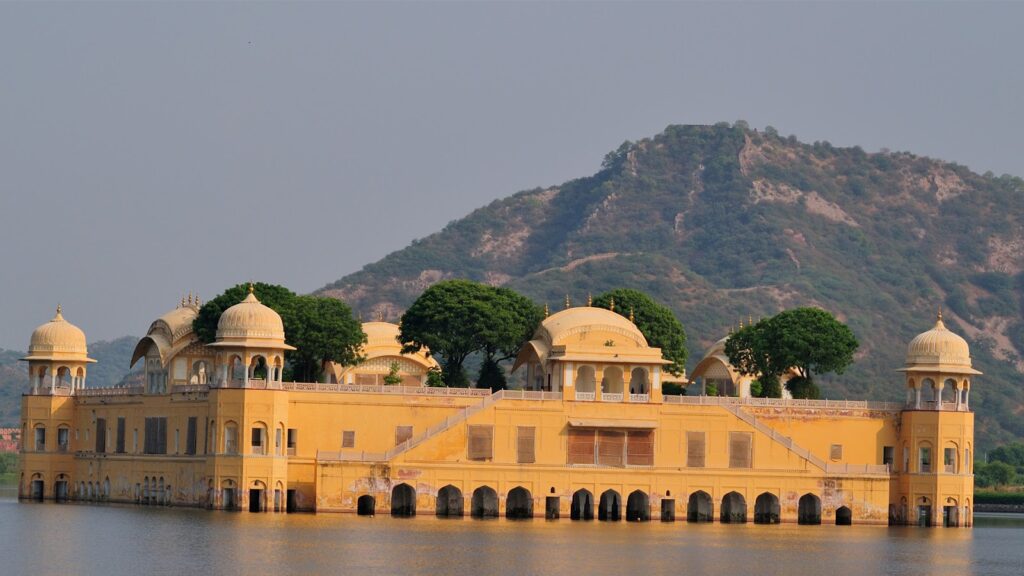
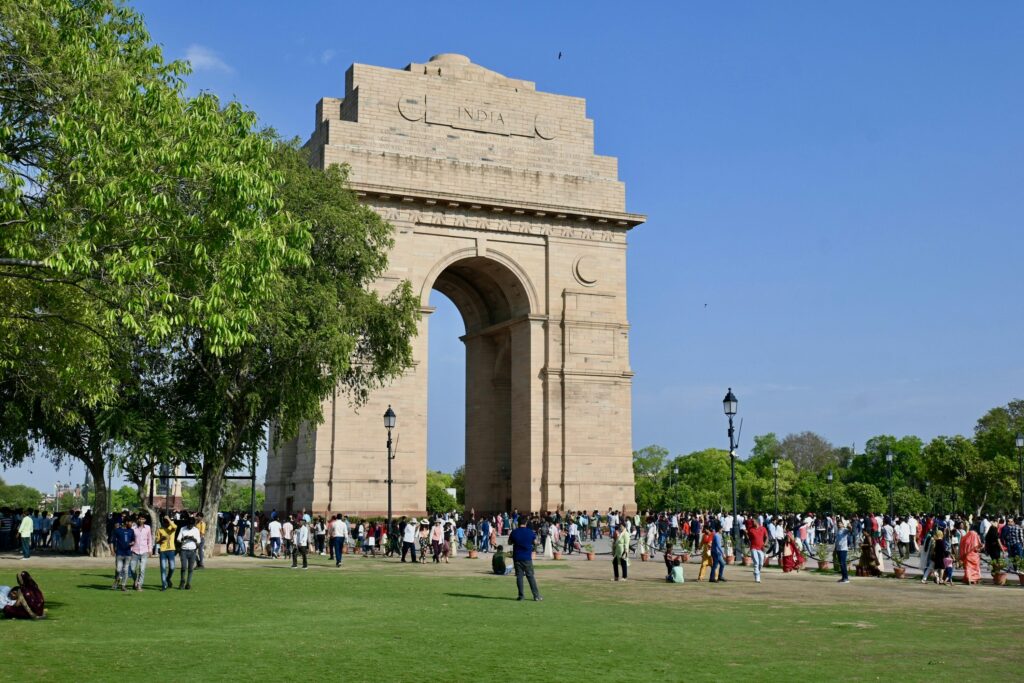
This tour filled with heritage sites, colorful culture, and stories from the forests of Ranthambore, this Golden Triangle tour is bound to leave you spell bound. From Royal renovated havelis, Palaces and Forts, enchanting desert, mind – boggling beauty of tranquil Lakes, crispy air of mountains to delightful pristine wilderness of Wildlife Sanctuaries – Rajasthan is one of a kind, it’s the best destination to celebrate your love and create memories that you can cherish for life.
| Tour Highlights | Delhi | Raj Ghat, India Gate, President House, Qutub Minar, | Agra | Taj Mahal, Agra Fort & Idmad-Ud-Daulah |
|---|---|
| Karauli | the famous lord Krishna temple (Madan Mohan ji) |
| Ranthambore | Enjoy Shared Jeep Safari |
| Jaipur | Elephant ride to Amber Fort Palace , City Palace, Jantar Mantar (Observatory) & Hawa Mahal (Palace of Winds) |
Detailed Itinerary
Your flight will land at Delhi International Airport sharp in the morning after which you will be transferred to the hotel. The first day you will be exploring the historical walled city of Delhi. the sightseeing tour of Delhi will include the venues like Qutab Minar, Humayun's Tomb, India Gate, President House, Parliament, Red Fort, and Jama Masjid. In the evening you will roaming through the shopping streets in Cannaught place, where you will have the opportunity to buy number of handicraft items brought from all over country.
Overnight Hotel - Delhi (B)
After breakfast we will visit Old Delhi was an ancient walled city. Mughal Emperor Shah Jehan in 1650 switched the Mughal capital from Agra to Delhi. Shah Jehan possessing an exquisite talent, especially in architecture, created the seventh city and in the process brought about Delhi's glorious renaissance. Start the day with a cycle rickshaw ride through Old Delhi. Here you will see Red Fort (from outside) the most opulent Fort and Palace of the Mughal Empire. The fort is Shah Jehan's symbol of power and elegance, built behind red sandstone walls. Its main gate (Lahore Gate) faces Chandni Chowk, the perpetually congested avenue heading west from the Red Fort is filled with twisting lanes, small streets and crowded bazaars. If you peer through a portico you may see a man getting shaved, silver being weighed, or any other conceivable form of intense commerce. Also visit Raj Ghat, the memorial site of the Mahatma Gandhi; Jama Masjid, the largest mosque in India; and Chandni Chowk, the bustling and colourful market of the old city. Chandni Chowk was the commercial center of Delhi in the old time and you will see it come alive in the morning as the trading day starts.
This is a marvel of modern engineering to have been put in to one of the most crowded parts of India. A perfect example of how India changing while still keeping to its past.
Afternoon visit New Delhi was designed and built by the British in the 1920's - it's a city of wide boulevards impressive Government buildings, green parks and gardens. In 1911 King George V announced the transfer of the capital from Calcutta to Delhi. The King's architects, Lutyens and Baker, set in motion the design and construction of Delhi's eight city - New Delhi. Lutyens designed an "Imperial City" having palatial-sized buildings set amid broad tree-lined avenues punctuated by Mughal style gardens, complete with fountains and shallow pools. It took 20 years to complete this immense undertaking only to have the British pack up and relinquish the subcontinent in 1947. You will visit Qutub Minar- Qutub Minar also Qutub Minar, is a UNESCO World Heritage Site. The Qutub Minar is constructed with red sandstone and marbel, it is the tallest free-standing stone tower in the world, and the tallest minaret in India, with a height of 72.5 meters (237.8 ft), contains 379 stairs to reach the top, and the diameter of base is 14.3 meters where as the last store is of 2.7 meters. The Construction was commenced by Qutb-ud-din Aibak in 1199 A.D and completed by Iltutmish.
The Qutub Minar is notable for being one of the earliest and most prominent examples of Indo-Islamic architecture. It is surrounded by several other ancient and medieval structures and ruins, collectively known as Qutub complex. Your drive takes you along the ceremonial avenue, Rajpath, past the imposing India Gate and Parliament House.
Overnight stay at hotel
This morning your driver will meet you in the hotel and you will drive to Agra (approximately 4 hours), home to the world famous Taj Mahal. Agra rose to fame in the mediaeval period as the capital of the Mughal Empire and was beautified with gardens, waterfalls, bathhouses and canals. In modern times, the city of Agra houses a thriving carpet industry. Upon arrival, check-in to your hotel.
Later visit the tomb of Idmad-Ud-Daulah a Mughal mausoleum, often described as “jewel box” and sometimes called “Baby Taj”. The tomb of Idmad-Ud-Daulah is often regarded as a draft of the Taj Mahal.
Overnight stay at hotel.
You will have an early start this morning to view Taj Mahal as the sun is rising.
The Taj Mahal was built by the Mughal Emperor Shah Jahan in memory of his favourite wife, Mumtaz Mahal, who died in 1631. This sublime garden tomb, an image of the Islamic garden of paradise, cost nearly 41 million rupees and consists of 500kg of gold. About 20,000 workers laboured for 12 years to complete it in 1643.
From here you will return to your hotel for breakfast and a chance to freshen up. Continue on with a visit to a stone inlay workshop and Agra Fort, situated on the west bank of the Yamuna River.
Agra Fort was built by Emperor Akbar between 1565 and 1573. Its imposing red sandstone ramparts form a crescent along the river front and encompass an enormous complex of courtly buildings, ranging in style from the early eclecticism of Akbar to the sublime elegance of Shah Jahan. The barracks to the north are British additions from the 19th Century. A deep moat, once filled with water from the Yamuna River, surrounds the fort.
Later drive to Karauli. Arrive and check-in at the hotel.
Karauli was officially founded in 1348 AD by the Yaduvanshi Rajput, Raja Arjun Pal. This holy city was originally known as Kalyanpuri, after the local deity Kalyanji. Legend has it that the princely state of karauli (17 Gun salutes) was established by Raja Bijal pal Jadon, The 88th descendent of lord Krishna, as far back as 995 AD.
Afternoon we will visit the 500 year old city palace full of frescos, fine stone carvings & paintings.
Before returning to the hotel you can also visit the famous lord Krishna temple (Madan Mohan ji) which is in the city palace campus for evening arti.
Overnight stay at hotel
Leaving Karauli we head south to Ranthambore National Park, one of the prime examples of Project Tiger's conservation efforts in Rajasthan.
The forest around Ranthambore was once the private hunting grounds of the Maharajas of Jaipur. The desire to preserve the game in this forest for sport was ultimately responsible for their conservation and subsequent rescue by Project Tiger.
More than any other park or sanctuary in India, tigers are frequently spotted here in daylight.
This afternoon we enjoy a safari ride in a canter (an open top Jeep-like vehicle) in the national park before returning to our hotel for the night.
Please note: Photo ID is required when visiting the park. Please ensure you bring your passport to allow entry.
Overnight stay at hotel
Today we will enjoy an early morning and a mid-afternoon canter safari around an estimated area of 400sq km of game reserve.
IMP: Please remember to bring your passport again today to allow entry
Overnight stay at hotel
After breakfast we drive to Jaipur, a city founded in 1727 as Mughal power within India was declining. At this time the then Maharaja Jai Singh moved his capital from Amer Fort down onto the plain below. The city is now the capital of Rajasthan State and commonly called the 'Pink City' because of the pink paint on the buildings in the old city area. This was apparently done to imitate the magnificent, red sandstone buildings of the Mughals and in an attempt to impress the Prince of Wales when he visited Jaipur in 1876.
Upon arrival check into your hotel and
Overnight stay at hotel
Starting with a brief photo stop at Hawa Mahal (Palace of the Winds), continue to Amer Fort, or 'Amber Fort' as the British called it. Erected in 1799 by the Sawai Pratap Singh, the Hawa Mahal was built so that the veiled ladies of his harem could observe, unnoticed, the lively street scenes below. Arriving at the base of Amer Fort, you will board our jeep for a ride all the way up to the entrance of the fort. Inside you will visit the Hall of Victory which houses the famed Sheesh Mahal.
Visit the Maharaja's City Palace to explore the former royal residence; part of the building has been converted into a museum, while the Royal family of Jaipur still uses the remaining sections of the palace. Outside the gate to the Maharaja’s City Palace is Jantar Mantar, the largest stone and marble crafted observatory in the world. The observatory has 17 large instruments, many of them still in working condition. Enjoy a walk around the local shops inside the walled city before returning to your hotel.
Overnight stay at hotel
Today you will drive back to Delhi. Arrive Delhi and transfer to the International airport to board your flight for onward destination
**********END OF OUR SERVICES **********
In all hotels the Check-in time is 1500 Hours and Check-out is 1100 Hours at noon.
Provide Your Details - Our experts would love to create package just for you
Travel Details *MANDATORY

Satisfaction
You Can Trust

Travel

Hotels