
Golden Triangle with Haridwar & Rishikesh
- Home / Beach Holiday Packages / Golden Triangle with Haridwar & Rishikesh
The Golden Triangle with Haridwar and Rishikesh is an extended tour package that adds the spiritual cities of Haridwar and Rishikesh to the classic Golden Triangle circuit, which typically includes Delhi, Agra, and Jaipur. tour allows you to experience India’s historical landmarks, like the Taj Mahal, along with spiritual and adventure activities, such as the Ganges Aarti in Haridwar and various adventure sports in Rishikesh.
| Tour Highlights | |
|---|---|
| Delhi | Swaminarayan Akshardham, Raj Ghat, India Gate, President House, Qutub Minar |
| Jaipur | Elephant ride to Amber Fort Palace , City Palace, Jantar Mantar (Observatory) & Hawa Mahal (Palace of Winds) |
| Agra | Taj Mahal & Agra Fort |
| Haridwar | the Grand Ganges Aarti at Har Ki Pauri, The Mansa Devi temple |
| Rishikesh | Laxman Jhula (Closed for walking), Ram Jhoola and Neer Gaddu waterfall. |
Detailed Itinerary
On arrival Delhi, you will receive a warm welcome at the International Airport by our representative.
After meet & greet transfer to hotel in Delhi. On arrival check in at hotel (check in time 1500 hrs).
15:30 hrs pick up from hotel and drive to visit Swaminarayan Akshardham (Monday Closed) in Delhi epitomizes 10,000 years of Indian culture in all its breathtaking grandeur, beauty, wisdom an d bliss. It brilliantly showcases the essence of India’s ancient architecture, traditions and timeless spiritual messages. The Akshardham experience is an enlightening journey through India’s glorious art, values and contributions for the progress, happiness and harmony of mankind.
The Swami Narayan Akshardham complex was built in only five years through the blessings of HDH Pramukh Swami Maharaj of the Bochasanwasi Shri Akshar Purushottam Swaminarayan Sanstha (BAPS) and the colossal devotional efforts of 11,000 artisans and thousands of BAPS volunteers. Heralded by the Guinness World Record as the World’s Largest Comprehensive Hindu Temple, the complex was inaugurated on 6 November, 2005.
Musical Water Show - Circle of Life (Evening at 18:45 hrs)
A spectacular musical fountain show that depicts the cycle of birth, life, and death as described in Indian philosophy. Back to hotel.
Overnight stay at hotel
After breakfast visit New Delhi was designed and built by the British in the 1920's - it's a city of wide boulevards impressive Government buildings, green parks and gardens. In 1911 King George V announced the transfer of the capital from Calcutta to Delhi. The King's architects, Lutyens and Baker, set in motion the design and construction of Delhi's eight city - New Delhi. Lutyens designed an "Imperial City" having palatial-sized buildings set amid broad tree-lined avenues punctuated by Mughal style gardens, complete with fountains and shallow pools. It took 20 years to complete this immense undertaking only to have the British pack up and relinquish the subcontinent in 1947. You will visit Qutub Minar- Qutub Minar also Qutub Minar, is a UNESCO World Heritage Site. The Qutub Minar is constructed with red sandstone and marbel, it is the tallest free-standing stone tower in the world, and the tallest minaret in India, with a height of 72.5 meters (237.8 ft), contains 379 stairs to reach the top, and the diameter of base is 14.3 meters where as the last store is of 2.7 meters. The Construction was commenced by Qutb-ud-din Aibak in 1199 A.D and completed by Iltutmish.
The Qutub Minar is notable for being one of the earliest and most prominent examples of Indo-Islamic architecture. It is surrounded by several other ancient and medieval structures and ruins, collectively known as Qutub complex. Your drive takes you along the ceremonial avenue, Rajpath, past the imposing India Gate and Parliament House.
Later drive by surface to Jaipur (265 Kms/5 Hours)
Jaipur, a city founded in 1727 as Mughal power within India was declining. At this time the then Maharaja Jai Singh moved his capital from Amer Fort down onto the plain below. The city is now the capital of Rajasthan State and commonly called the 'Pink City' because of the pink paint on the buildings in the old city area. This was apparently done to imitate the magnificent, red sandstone buildings of the Mughals and in an attempt to impress the Prince of Wales when he visited Jaipur in 1876. Upon arrival check into your hotel rest of the day at Leisure
Overnight at Hotel
After breakfast around 0800 hrs: Depart from hotel to visit Amer Fort enroute drive past Hawa Mahal: Hawa Mahal is a palace, so named because it was essentially a high screen wall built so the women of the royal household could observe street festivals while unseen from outside. We stop here for the photographs from outside.
Amber Fort, You will explore the massive Amber Fort. Visit the Hall of Victory or Jai Mahal and Jagmandir. The top of the hill on which the fort is situated. It has halls of Public and Private Audience, a Sheesh Mahal (hall of mirrors) various marble palaces which are marvellous examples of ancient Rajput architecture.
After Amer Fort we stop at Jal Mahal for photography from outside, entry is not permitted).
Jal Mahal Jaipur: Literally meaning ‘Water Palace’, Jal Mahal is located amidst the Man Sagar Lake and was constructed by Sawai Pratap Singh in 1799. The beauty of the palace lies in its location as the palace cum hotel is standing in the Centre of the lake.
Proceed to visit City Palace – the former royal residence built in a blend of the Rajasthani and Mughal styles which houses a museum with a superb collection of Rajasthani costumes and armoury of the Mughals and Rajputs, including swords of different shapes and sizes with ornate handles. It has an art gallery with an excellent collection of miniature paintings, carpets, royal paraphernalia and rare astronomical works in Arabic, Persian, Latin and Sanskrit.
Shopping: Jaipur-a treasure trove for shoppers, shopping is irresistible, a wide range of handicrafts are available in the market, most of items are produced in the centers in and around the city. The city is one of the most important centers in the world for cutting and polishing precious and semi-precious stone, diamonds. Jaipur is also famous for its textiles. Sanguinary and Bagri block prints are the fashion designer’s craze these days. The Bandhej (tie and dye) print is very typical of the region.
Overnight stay at hotel
After breakfast at 08:30 hrs drive to Agra. On arrival in Agra check-in at your Hotel.
Afternoon visit Taj Mahal & Agra Fort
The tour of world famous Taj Mahal - Perhaps no other symbol epitomizes India as Taj Mahal. Situated on the banks of the river Yamuna, the Taj Mahal is an epitome of love, a poem in marble by the Mughal Emperor Shahjehan for his beloved queen Mumtaz Mahal. The Taj Mahal is entirely made of white marble and its walls are decorated with exquisite pietra dura (stone inlay) work. It is said that different types of precious and semi-precious stones were used in the intricate inlay work done on the interiors. This magnificent monument is set around a Charbagh or 'four garden' plan, which is split by watercourses-a reflection of the Persian style. (TAJ MAHAL IS CLOSED ON FRIDAYS).
Later visit Agra Fort - Built by Emperor Akbar on the west bank of the river Yamuna and beautified with palaces and gardens by Jehangir, Agra Fort today dominates the center of the city. Diwan-i-Aam (hall of public audience) and Diwan-i-Khas (hall of private audience) were built by Shahjehan for receiving audiences. Other places to see within the fort include the Khas Mahal, Sheesh Mahal (the mirror palace)
Overnight stay at hotel
After breakfast you will be transferred to the holy city Haridwar.
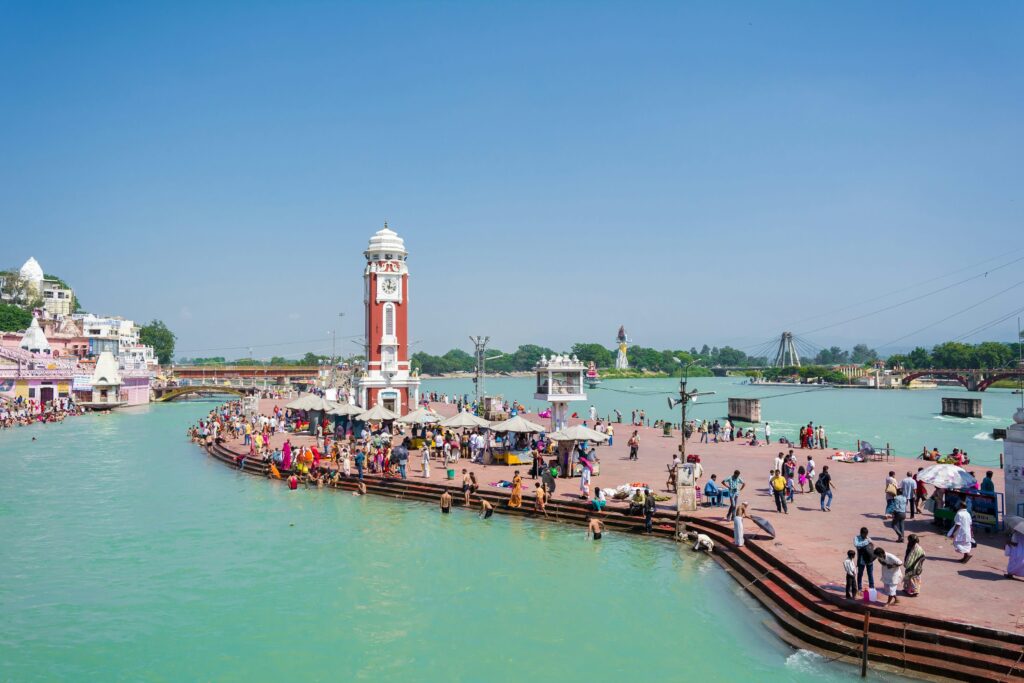
Haridwar: The holy city is situated on the banks of the Holy River Ganges and will refresh your mind and body. A trip to the Gateway of God is regarded as one of the most popular Hindu pilgrimages.
Arrive Haridwar and transfer to Hotel.
In the evening view the Grand Ganges Aarti at Har Ki Pauri. The Ganga Aarti in Haridwar 's Har-ki-Pauri is one of the famous rituals in India. It starts at around 18.00 hrs. After sunset, with large crowds gathered around both the banks of a canal that carries the waters of Ganges, priests hold three-tier diyas and fire bowls in their hands and chant the Ganga mantras. The bells of the temples at the ghat start ringing at the same time making the atmosphere enchanting. People float diyas on the river to show their respect. Return to hotel for overnight stay.
Overnight stay at hotel
DAY 06: HARIDWAR à RISHIKESH (35 KILOMETER / 1 HOURS)
This early morning you can also visit Har Ki Pauri again for morning prayer, you may also take Holy Bath in River Ganges. After breakfast visit hill top temples Mansa Devi. You can take a ropeway to skip walking and get a city view while sitting on the ropeway.
The Mansa Devi temple in Uttarakhand has over millions of devotees visiting this ancient temple. Maa Mansa Devi is known as the wish-fulfilling goddess. The temple is one of the most ancient and famous Siddhpeeth, located on top of the Shivalik Hills, the southernmost mountain chain of the Himalayas.
The temple is also known as Bilwa Tirth is one of the Panch Tirth (Five Pilgrimages) within Haridwar. Later you will be transferred to Rishikesh, an ancient place famous for its Ashrams and for grand viewing of Ganges. On arrival check in to your hotel.
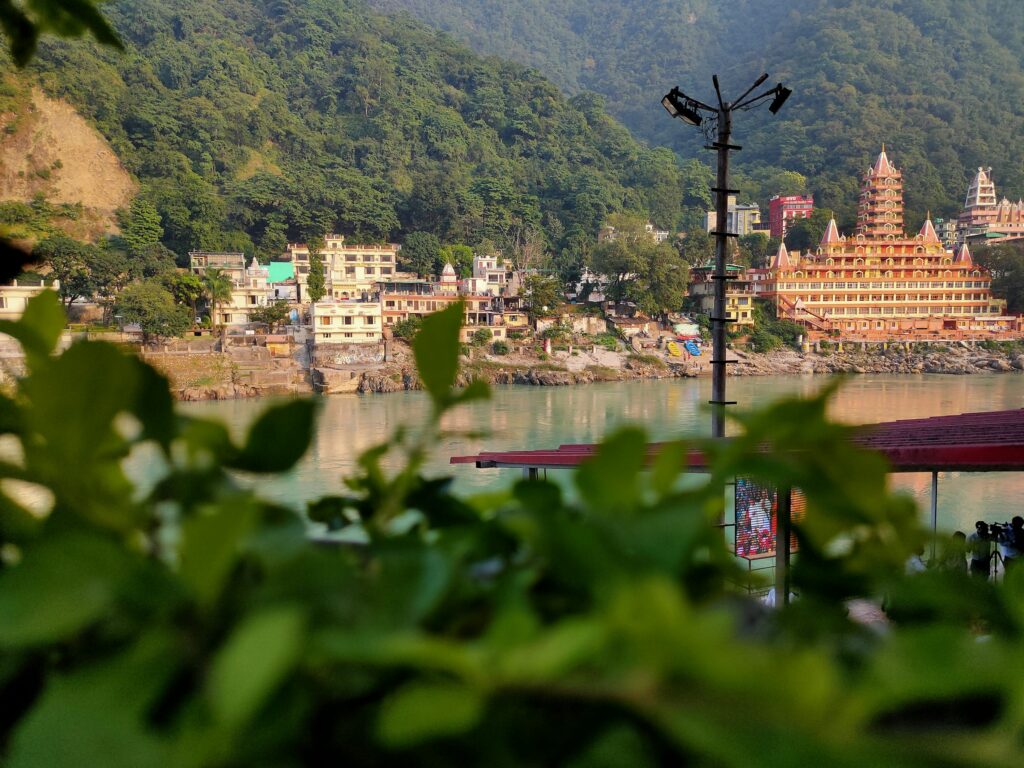
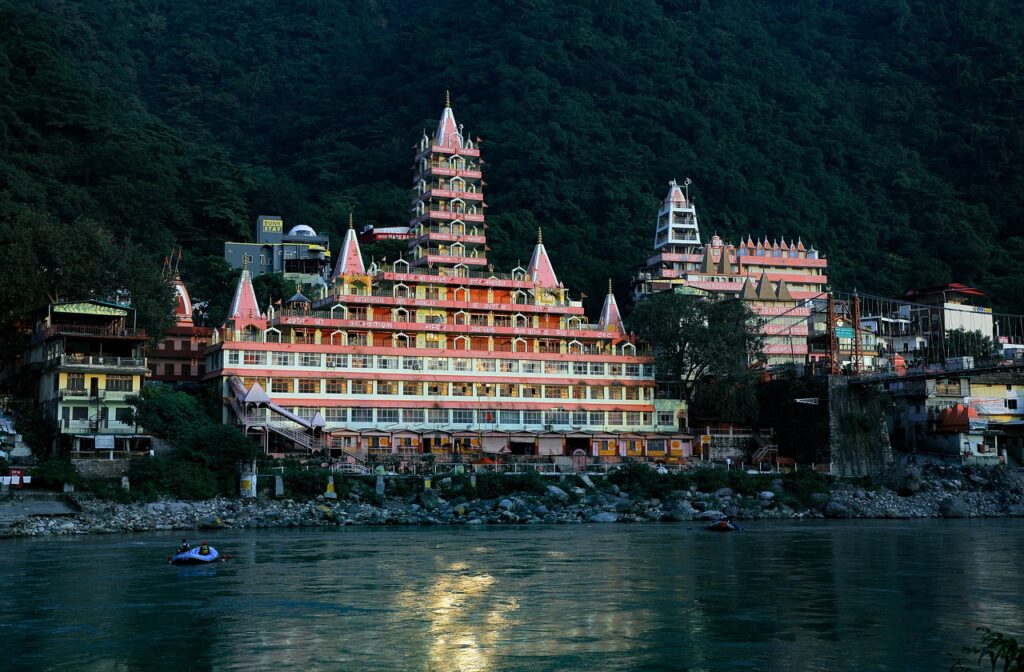
This Evening visit Laxman Jhula (Closed for walking), Ram Jhoola and Neer Gaddu waterfall.
Visit the famous Parmarth Niketan Ashram - Ashram is a true spiritual haven, lying on the holy banks of Mother Ganga in the lap of lush Himalayas. In the evening experience the Ganga Aarti at Triveni ghat, the main and foremost thing here is to see the flow of Ganga river along with hundreds of people praying all together and bells are ringing everywhere, that whole scenario will mesmerize one for sure. Return back to your hotel.
Overnight stay at hotel.
Sharp in the next morning, we will be visiting the Bharatpur Wildlife Sanctuary, founded by Maharaja Suraj Mal in the year 1733. It was once an impregnable, well-fortified city, & the capital of a kingdom ruled by Jat maharajas. The trio of Bharatpur, Deeg & Dholpur has played an important part in the Jat history of Rajasthan.
Sanctuary was previously known as Bharatpur bird Sanctuary & now known as Keoladeo National Park. The name Keoladeo is derived from the name of an ancient Hindu temple devoted to Lord Shiva in the sanctuary's central zone while the Hindi term 'Ghana' implies dense, thick areas of forest cover. This is a magnificent park having one of the World's greatest & most important heronries. It is situated at the confluence of Ghambhir & Banganga Rivers in Bharatpur district. Now a World Heritage site by UNESCO, this former duck-hunting reserve of the Maharajas is one of the major wintering areas for large numbers of aquatic birds from Afghanistan, Siberia & Turkmenistan. Some 364 species of birds, including the rare Siberian Crane, have been recorded in the park.
Overnight Wildlife Resort - Bharatpur (B, L, D)
Provide Your Details - Our experts would love to create package just for you
Travel Details *MANDATORY

Satisfaction
You Can Trust

Travel

Hotels