
- Home / Kerala Tours / Buddha’s Journey with Taj Mahal
Gems of Rajasthan combining the iconic Golden Triangle (Delhi, Agra, Jaipur) with other significant cultural and historical sites, including Rajasthan’s cities (Udaipur, Jodhpur, Pushkar), the temple complex of Khajuraho, and the spiritual city of Varanasi, all starting and ending in Delhi. This tour offers an extensive exploration of North India’s rich heritage, including historical forts, majestic palaces, and significant religious sites
| Tour Highlights | |
|---|---|
| Delhi | Swaminarayan Akshardham Raj Ghat, India Gate, President House, Qutub Minar, |
| Udaipur | enjoy a cruise on the 4km long Lake Pichola, Folk Museum and Mewar Art Gallery, Sahelion Ki Bari Garden (Garden for the Maids of Honour), City Palace, Jain temple complex of Ranakpur |
| Jodhpur | Mehrangarh Fort, Jaswant Thada, visit Clock Tower along with local markets |
| Pushkar | Brahma Temple, Visit local market and roam around Pushkar Lake |
| Jaipur | Galta Ji (Monkey Temple), Amer Fort, Hawa Mahal, Jal Mahal Jaipur, City Palace, Abhaneri Step well |
| Agra | Taj Mahal, Agra Fort & Idmad-Ud-Daulah |
| Khajuraho | Orchha visit, Western Group of Khajuraho temples |
| Varanasi | Ganga Aarti (a prayer ceremony), Durga Temple, Tulsi Manas Temple, Banaras Hindu University, Vishwanath Temple, Sarnath |
Detailed Itinerary
On arrival Delhi, you will receive a warm welcome at the International Airport by our representative.
After meet & greet transfer to hotel in Delhi. On arrival check in at hotel (check in time 1400 hrs).
15:30 hrs pick up from hotel and drive to visit Swaminarayan Akshardham (Monday Closed) in Delhi epitomizes 10,000 years of Indian culture in all its breathtaking grandeur, beauty, wisdom an d bliss. It brilliantly showcases the essence of India’s ancient architecture, traditions and timeless spiritual messages. The Akshardham experience is an enlightening journey through India’s glorious art, values and contributions for the progress, happiness and harmony of mankind.
The Swami Narayan Akshardham complex was built in only five years through the blessings of HDH Pramukh Swami Maharaj of the Bochasanwasi Shri Akshar Purushottam Swaminarayan Sanstha (BAPS) and the colossal devotional efforts of 11,000 artisans and thousands of BAPS volunteers. Heralded by the Guinness World Record as the World’s Largest Comprehensive Hindu Temple, the complex was inaugurated on 6 November, 2005.
Musical Water Show - Circle of Life (Evening at 18:45 hrs)
A spectacular musical fountain show that depicts the cycle of birth, life, and death as described in Indian philosophy. Back to hotel.
Overnight stay at hotel
After breakfast we will visit Old Delhi was an ancient walled city. Mughal Emperor Shah Jehan in 1650 switched the Mughal capital from Agra to Delhi. Shah Jehan possessing an exquisite talent, especially in architecture, created the seventh city and in the process brought about Delhi's glorious renaissance. Start the day with a cycle rickshaw ride through Old Delhi. Here you will see Red Fort (from outside) the most opulent Fort and Palace of the Mughal Empire. The fort is Shah Jehan's symbol of power and elegance, built behind red sandstone walls. Its main gate (Lahore Gate) faces Chandni Chowk, the perpetually congested avenue heading west from the Red Fort is filled with twisting lanes, small streets and crowded bazaars. If you peer through a portico you may see a man getting shaved, silver being weighed, or any other conceivable form of intense commerce. Also visit Raj Ghat, the memorial site of the Mahatma Gandhi; Jama Masjid, the largest mosque in India; and Chandni Chowk, the bustling and colourful market of the old city. Chandni Chowk was the commercial centre of Delhi in the old time and you will see it come alive in the morning as the trading day starts.
This is a marvel of modern engineering to have been put in to one of the most crowded parts of India. A perfect example of how India changing while still keeping to its past.
Afternoon visit New Delhi was designed and built by the British in the 1920's - it's a city of wide boulevards impressive Government buildings, green parks and gardens. In 1911 King George V announced the transfer of the capital from Calcutta to Delhi. The King's architects, Lutyens and Baker, set in motion the design and construction of Delhi's eight city - New Delhi. Lutyens designed an "Imperial City" having palatial-sized buildings set amid broad tree-lined avenues punctuated by Mughal style gardens, complete with fountains and shallow pools. It took 20 years to complete this immense undertaking only to have the British pack up and relinquish the subcontinent in 1947. You will visit Qutub Minar- Qutub Minar also Qutub Minar, is a UNESCO World Heritage Site. The Qutub Minar is constructed with red sandstone and marbel, it is the tallest free-standing stone tower in the world, and the tallest minaret in India, with a height of 72.5 meters (237.8 ft), contains 379 stairs to reach the top, and the diameter of base is 14.3 meters where as the last store is of 2.7 meters. The Construction was commenced by Qutb-ud-din Aibak in 1199 A.D and completed by Iltutmish.
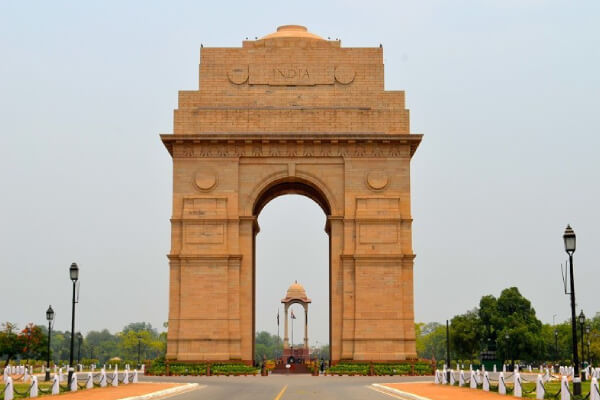
The Qutub Minar is notable for being one of the earliest and most prominent examples of Indo-Islamic architecture. It is surrounded by several other ancient and medieval structures and ruins, collectively known as Qutub complex. Your drive takes you along the ceremonial avenue, Rajpath, past the imposing India Gate and Parliament House.
Overnight stay at hotel
After Breakfast you will be transfer to Delhi Airport to board flight for Udaipur.
DEP: DELHI 1110 Hours FLIGHT: AI 857 (Air India)
ARR: UDAIPUR 1225 Hours
Arrive Udaipur, Meeting and assistance on arrival and transfer to the hotel.
The origins of Udaipur are based on a legend which tells of a holy sage that Maharaja Udai Singh encountered while hunting in the foothills of the Aravalli Range in Mewar. The sage told the King to build a palace in that exact spot and it would be well protected and so with this advice Maharaja Udai Singh built his residence there. At the time, Chittorgarh was the capital of Mewar state, however in 1568 Chittorgarh was attacked by the Mughal Emperor Akbar, and so Maharaja Udai Singh moved the capital to Udaipur. Today, the City Palace of Udaipur is still home to Maharaja Udai Singh’s descendents who remain rulers of this independent state. We will be able to tell if the Maharaja is in residence by the flag hanging from the palace wall.
This afternoon we enjoy a cruise on the 4km long Lake Pichola, fringed with hills, palaces, havelis, ghats and temples. While on the cruise we will see the Lake Palace, formally known as Jag Niwas, built between 1734 and 1751. It was once a Royal summer retreat and is now one of the world's greatest hotels. It is also a popular location for film shoots, including James Bond's Octopussy.
Overnight stay at hotel
We begin our second day in Udaipur with a drive around Fateh Sagar Lake, which has a garden café on its island. Located nearby are the Folk Museum and Mewar Art Gallery. Although the Folk Museum is small and has been neglected a bit over the years, the unique variety of ethnic groups and cultures of the hills around Udaipur make this visit well worthwhile. We also visit the Sahelion Ki Bari Garden (Garden for the Maids of Honour). This delightful 18th-century retreat in the north of the city was built for the Queen of Udaipur, whose dowry included 48 maids.
After lunch, we visit the massive City Palace which overlooks Lake Pichola. The City Palace, built in 1725, comprises of 11 palaces including the Dilkhush Mahal, Sheesh Mahal, Moti Mahal and the Palace of Lord Krishna, all of which are ornately decorated. We then walk down the street leading from the gates of the palace to our bus where we have the opportunity to shop in the local stalls along the way.
Overnight stay at hotel
After breakfast we commence our drive to Udaipur, visiting the Jain temple complex of Ranakpur en route. Located in the lovely valley of the Aravalli, the temple complex was built in the 15th Century. The main temple is the Chaumukha (four-faced) Temple, built in 1439. Its 29 halls are supported by 1,444 pillars, of which no two are alike. Continue to Jodhpur, Arrive Jodhpur and transfer to hotel.
Jodhpur, the second largest city in Rajasthan located at the entrance to the Thar Desert in a region called Marwar. The old city, founded in 1459, is surrounded by a 10km long wall. The Meherangarh Fort overlooks the city and the red sandstone palaces within the fort form one of the most impressive and formidable complexes in Rajasthan.
Evening proceed to visit Clock Tower along with local markets.
The clock tower is a popular landmark in the old city. The vibrant Sardar Market is close to the tower, and narrow alleys lead from here to a bazaar selling vegetables, spices, Indian sweets, textiles, silver and handicrafts.
Overnight stay at hotel
After breakfast we will visit the 5km long Mehrangarh Fort situated on a 125m-high hill. Within the fort are some magnificent palaces with meticulously carved panels, latticed windows known as Jarokhas. The chambers of Moti Mahal, Phool Mahal, Sheesh Mahal, the Sileh Khana and the Daulat Khana are noteworthy for the splendour and glamour of a bygone era. Later we visit the Jaswant Thada, a cluster of royal cenotaphs of white marble built in 1899 in memory of Maharaja Jaswant Singh II. This is followed by a visit to the museum housed in the majestic Umaid Bhawan Palace and later we will have free time to explore the local vegetable market Subzi Mandi.
Around 1100 hrs, Arrive to Pushkar and transfer to Hotel rest of the day at Leisure.
Overnight stay at hotel
After breakfast proceed to visit Brahma Temple. A Hindu temple close to the sacred Pushkar Lake to which its legend has an indelible link. The temple is one of very few existing temples dedicated to the Hindu creator-god Brahma in India and remains the most prominent among them. The temple structure dates to the 14th century, partly rebuilt later. The temple is made of marble and stone slabs. It has a distinct red pinnacle and a bird motif. The temple sanctum sanctorum holds the image of four-headed Brahma and his consort Gayatri.
Also visit local market and roam around Pushkar Lake. It is a sacred lake of the Hindus. The Hindu scriptures describe it as "Tirtha-Raj" – the king of pilgrimage sites related to a water-body and relate it to the mythology of the creator-God Brahma, whose most prominent temple stands in Pushkar. The Pushkar Lake finds mention on coins as early as the 4th century BC.
Later drive to Jaipur. On Arrival Visit Galta Ji (Monkey Temple). Situated at about a distance of 10 kms from Jaipur in the city of Khania-Balaji, the Galtaji temple is a Hindu pilgrimage often visited by the people from all over the country. There are many temples in this site and one the special attractions of the place is a natural spring that flows downwards from the hill top. The temple comprises of 7 holy water tanks or kunds out of which the Galta Kund is the most significant of all.
Later transfer to hotel and check-in.
Overnight stay at hotel
After breakfast around 0800 hrs: Depart from hotel to visit Amer Fort enroute drive past Hawa Mahal: Hawa Mahal is a palace, so named because it was essentially a high screen wall built so the women of the royal household could observe street festivals while unseen from outside. We stop here for the photographs from outside.
Amber Fort, You will explore the massive Amber Fort with elephant ride (In case Elephant is not available, we will use Car / Jeep to reach the Fort). It is recommended to leave early as much as possible to get turn ahead for elephant ride to go up to the fort Entrance (last ride is at 10:30 hrs). One has to stand in queue and wait for the turn. There are no pre booking to book elephant ride in advance. Amber Fort, the ancient capital of the State until 1728. Visit the Hall of Victory or Jai Mahal and Jagmandir. The top of the hill on which the fort is situated. It has halls of Public and Private Audience, a Sheesh Mahal (hall of mirrors) various marble palaces which are marvellous examples of ancient Rajput architecture.
After Amer Fort we stop at Jal Mahal for photography from outside, entry is not permitted).
Jal Mahal Jaipur: Literally meaning ‘Water Palace’, Jal Mahal is located amidst the Man Sagar Lake and was constructed by Sawai Pratap Singh in 1799. The beauty of the palace lies in its location as the palace cum hotel is standing in the Centre of the lake.
Proceed to visit City Palace – the former royal residence built in a blend of the Rajasthani and Mughal styles which houses a museum with a superb collection of Rajasthani costumes and armoury of the Mughals and Rajputs, including swords of different shapes and sizes with ornate handles. It has an art gallery with an excellent collection of miniature paintings, carpets, royal paraphernalia and rare astronomical works in Arabic, Persian, Latin and Sanskrit.
Also visit Jantar-Mantar - a collection of nineteen architectural astronomical instruments built by the Rajput king Sawai Jai Singh II, and completed in 1734. It features the world's largest stone sundial, and is a UNESCO World Heritage site. Visit Local Bazar of Jaipur.
Overnight stay at hotel
After breakfast at 08:30 hrs drive to Jaipur en route visiting Abhaneri Step well. The Chand Baori is a step well built over a thousand years ago in the Abhaneri village of Rajasthan. It is one of the largest step wells in the world and also one of the most beautiful ones. Located in the eastern part of the province of Rajasthan, it was built by King Chanda somewhere in the 9th century. The Chand Baori is not an easy landmark to find, thus it is one of the hidden secrets of India! Step wells, also called bawdi or baori, are unique to this nation. The wells have steps built into the sides that lead down to the water.
Later on depart by surface for Agra. On arrival in Agra check-in at your Hotel.
Overnight stay at hotel
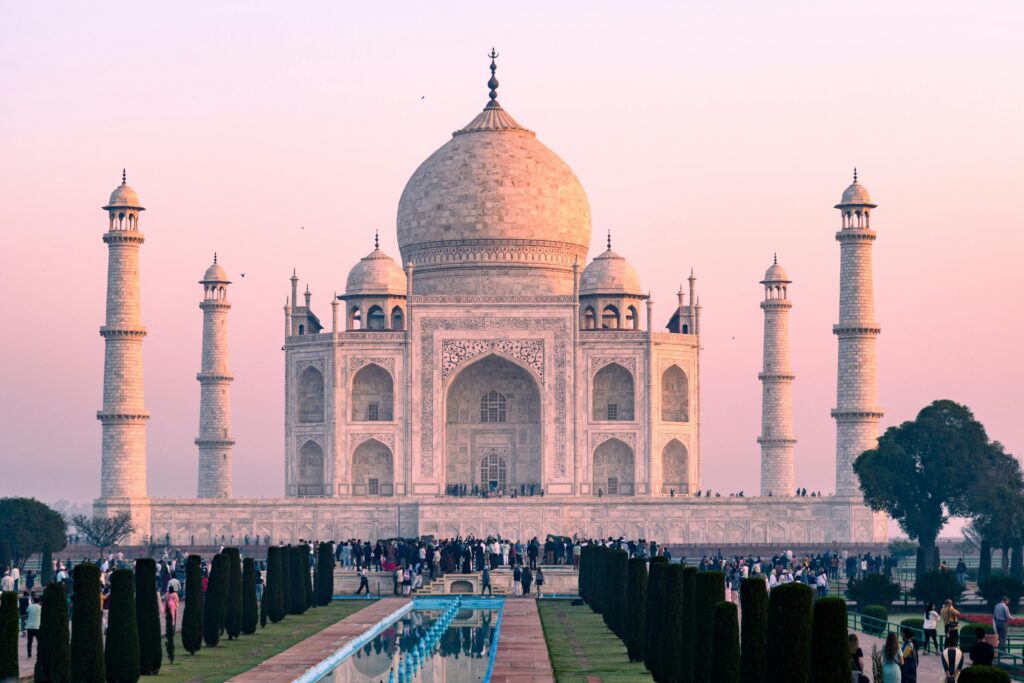
After early breakfast proceed for half day city tour of Agra visiting Taj Mahal, Agra Fort & Idmad-Ud-Daulah.
The tour of world famous Taj Mahal - Perhaps no other symbol epitomizes India as Taj Mahal. Situated on the banks of the river Yamuna, the Taj Mahal is an epitome of love, a poem in marble by the Mughal Emperor Shahjehan for his beloved queen Mumtaz Mahal. The Taj Mahal is entirely made of white marble and its walls are decorated with exquisite pietra dura (stone inlay) work. It is said that different types of precious and semi-precious stones were used in the intricate inlay work done on the interiors. This magnificent monument is set around a Charbagh or 'four garden' plan, which is split by watercourses-a reflection of the Persian style. (TAJ MAHAL IS CLOSED ON FRIDAYS).
Agra Fort - Built by Emperor Akbar on the west bank of the river Yamuna and beautified with palaces and gardens by Jehangir, Agra Fort today dominates the center of the city. Diwan-i-Aam (hall of public audience) and Diwan-i-Khas (hall of private audience) were built by Shahjehan for receiving audiences. Other places to see within the fort include the Khas Mahal, Sheesh Mahal (the mirror palace)
Later visit the tomb of Idmad-Ud-Daulah a Mughal mausoleum, often described as “jewel box” and sometimes called “Baby Taj”. The tomb of Idmad-Ud-Daulah is often regarded as a draft of the Taj Mahal.
Overnight stay at hotel
We rise early this morning and transfer to Agra railway station to board the Shatabdi Express train departing for Jhansi (train journey is approximately 2.5 hours).
DEP: AGRA 0755 Hours TRAIN: 12002 / BHOPAL SHTABDI
ARR: JHANSI 1045 Hours
Upon arrival in Jhansi we board drive through the Indian countryside to Khajuraho, visiting Orchha en route.
Orchha is a mediaeval city, famous for its palaces and temples built by its Bundela rulers in the 16th Century. Jehangir Mahal, a tiered palace, is crowned by graceful cenotaphs, and commands a spectacular view of soaring temple spires and surrounding cenotaphs.
After our tour of Orchha we continue our drive to Khajuraho and upon arrival we check into our hotel.
Overnight stay at hotel
After breakfast and check-out we commence our sightseeing tour of the Western Group of Khajuraho temples. The most important and one of the largest of the Western Group of temples is the Kandariya Mahadeo Temple, dedicated to Lord Shiva. We also see the Vamana Temple, dedicated to the ‘Vamana’ or dwarf incarnation of Lord Vishnu as well as the Javari Temple.
Overnight stay at hotel
After breakfast transfer to Khajuraho Airport to board flight for Varanasi
(IMP: if the flight does not operate, the client will proceed by road from Khajuraho to Varanasi (a distance of 360 km, approximately 6 hours by car, there will be additional supplement cost)
DEP: KHAJURAHO 1100 Hours Flight: 6e 5082 (indigo)
ARR: VARANASI 1155 Hours
Arrive Varanasi airport and transferred to hotel.
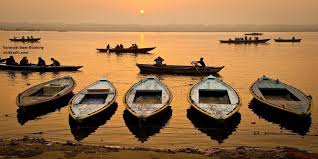
As a religious capital of Hinduism, Varanasi is the oldest living city in India as well as one of the world’s most ancient cities. This evening we take a rickshaw ride through the streets of Varanasi to the ghats of the River Ganges to witness the Pooja ceremony of Ganga Aarti (a prayer ceremony).
Overnight stay at hotel
We have an early morning start today to commence our cruise on the River Ganges to view the ghats at sunrise when they are abuzz with activity. The devotees perform their ablutions in the river or offer prayers to the rising sun. As we cruise along the river we will have an ideal vantage point to view these activities.
Please note: It is inappropriate to take photos of any burning ghats, as this is a funeral ceremony.
Later this morning we commence on a brief sightseeing tour of Varanasi. We start by visiting some of the important temples like Bharat Mata Mandir, a unique temple inaugurated by Mahatma Gandhi, which interestingly houses one of the most perfect relief maps of India and is dedicated to Mother India. Another is the Durga Temple dedicated to Goddess Durga, consort of Lord Shiva.
Afterwards we drive through the largest residential university of Asia, Banaras Hindu University, founded by Pandit Madan Mohan Malviya, where we visit the new Vishwanath Temple in the university campus.
This afternoon we drive to visit the Buddhist sites at Sarnath. It is the fabled place where Lord Buddha delivered his first sermon to his disciples expounding the principles of Buddhism. The ruins here date back to as far as the 3rd Century BC.
Overnight stay at hotel
Enjoy the morning at our leisure. After checking out, we transfer to the airport to catch our flight to Delhi.
DEP: VARANASI 1700 Hours Flight: 6e 5082 (indigo)
ARR: DELHI 1840 HOURS
Arrive Delhi and transfer to Hotel, rest of the day at Leisure.
Overnight stay at hotel
After Breakfast you will be transfered to Delhi International airport to board flight for onward Journeys.
**********END OF OUR SERVICES **********
In all hotels the Check-in time is 1500 Hours and Check-out is 1100 Hours at noon.
Provide Your Details - Our experts would love to create package just for you
Travel Details *MANDATORY

Satisfaction
You Can Trust

Travel

Hotels